

Manual Billing vs POS System: Which Is Better for Businesses in Pakistan?

Introduction
Many small and medium businesses still rely on manual billing methods, such as handwritten invoices or basic spreadsheets. While this method may seem simple, it can create serious challenges as the business grows.
With the advancement of technology, businesses are now adopting POS (Point of Sale) systems to automate sales, inventory, and financial management.
In this article, we will compare manual billing vs POS system to help business owners understand which solution is better for improving efficiency, accuracy, and business growth.
What is Manual Billing?
Manual billing refers to the traditional process of creating invoices by hand or using basic tools like notebooks, calculators, or spreadsheets.
In this method, business owners or staff manually:
- Write customer invoices
- Calculate totals and taxes
- Update stock records
- Maintain sales records
Although manual billing may work for very small businesses, it becomes difficult to manage as sales volume increases.
What is a POS System?
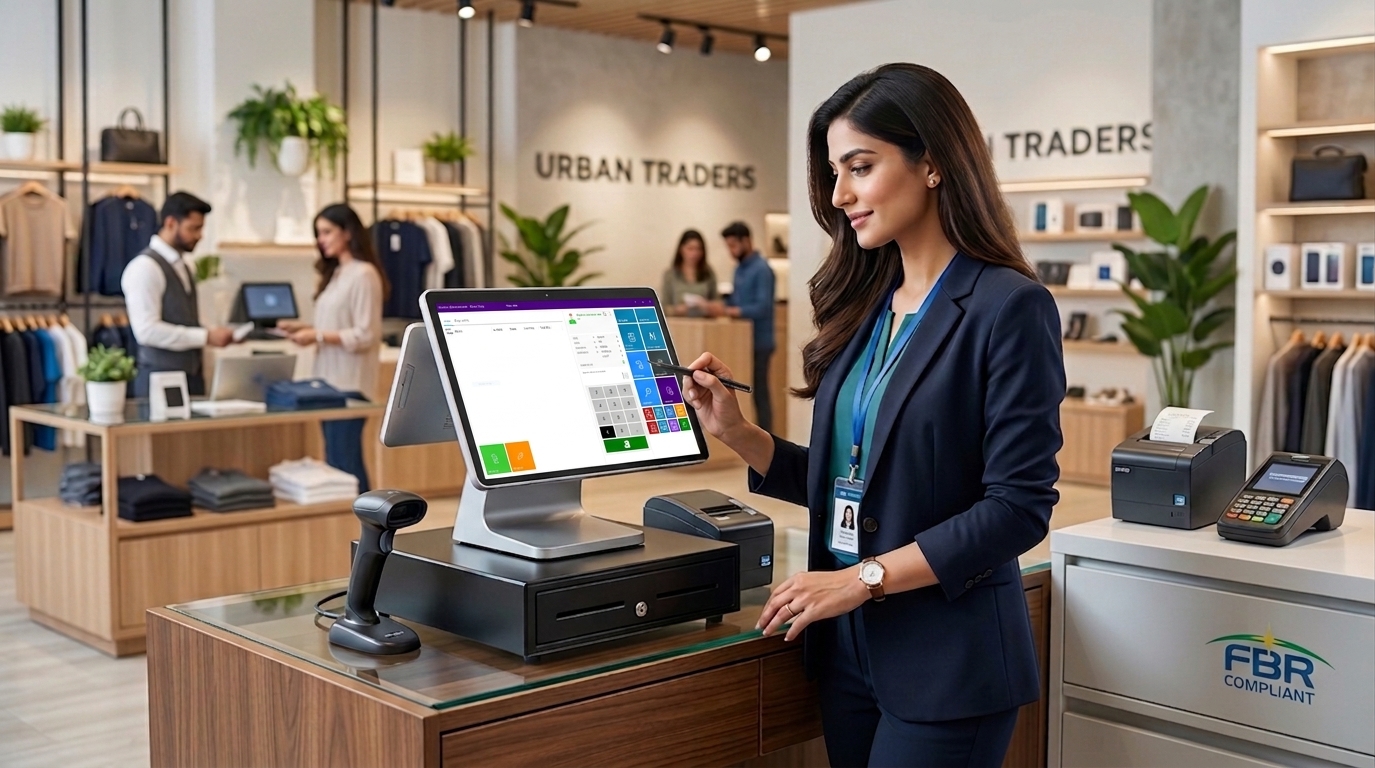
A POS system (Point of Sale software) is a digital solution that automates billing, sales tracking, inventory management, and reporting.
POS systems typically include:
- Billing software
- Barcode scanner integration
- Inventory management
- Customer records
- Sales and financial reports
By using POS software, businesses can manage their entire sales process quickly and accurately.
Manual Billing vs POS System: Key Differences
Speed of Billing
Manual billing requires staff to write invoices and calculate totals manually, which can slow down the checkout process and create long queues.
POS systems allow instant invoice generation using barcode scanning, making billing much faster.
Accuracy
Manual calculations increase the risk of errors in pricing, discounts, and totals.
POS systems automatically calculate totals, taxes, and discounts, reducing human errors.
Inventory Management
In manual billing, stock records are usually maintained separately, which can lead to inaccurate inventory tracking.
POS systems automatically update inventory whenever a sale is made.
Sales Reports
Manual systems require business owners to manually calculate daily or monthly sales reports.
POS systems generate detailed reports instantly, including:
- Daily sales
- Profit reports
- Product performance
- Staff performance
Business Growth
Manual billing becomes difficult to manage when the business grows or opens multiple branches.
POS systems allow businesses to manage multiple stores, track sales, and monitor operations from one platform.
Problems with Manual Billing
Many businesses experience several issues when using manual billing systems:
Human Errors
Mistakes in calculations can lead to incorrect billing and financial losses.
Time-Consuming Process
Manual invoice creation takes longer and slows down customer service.
Poor Inventory Control
Stock levels are difficult to track accurately.
Limited Business Insights
Business owners cannot easily analyze sales performance or customer trends.
Benefits of Using a POS System
Switching to a POS system offers many advantages for businesses.
Faster Checkout
Barcode scanning speeds up billing and improves customer experience.
Real-Time Inventory Tracking
Stock levels update automatically with every sale.
Detailed Reports
POS software provides valuable insights into sales, profits, and product performance.
Customer Management
Businesses can store customer data and purchase history.
Better Financial Control
Automated reporting helps business owners make better decisions.
Which Businesses Should Use POS Software?
POS systems are ideal for many types of businesses, including:
- Retail shops
- Supermarkets
- Restaurants
- Pharmacies
- Boutiques and garment stores
- Electronics stores
These businesses handle multiple products and daily transactions, making POS systems essential for efficient operations.
When Manual Billing May Still Work
Manual billing may still be suitable for:
- Very small shops with limited daily sales
- Businesses with only a few products
- Temporary or short-term businesses
However, even small businesses benefit greatly from adopting POS software as they grow.
Conclusion
While manual billing may seem simple, it often leads to errors, slow service, and poor inventory management. A POS system provides faster billing, accurate reporting, and better control over business operations.
For businesses aiming to improve efficiency and scale their operations, investing in a modern POS system is a smart and future-ready decision.
By switching from manual billing to POS software, businesses can streamline their processes, improve customer satisfaction, and achieve long-term growth.
Author Details

Syed Hussain Raza
Syed Hussain Raza is a Customer Succession and Operations Lead who drives revenue growth by connecting smart sales strategies with smooth operational workflows to eliminate bottlenecks and maximize client retention.
Related Posts

10 Sep,2026
Restaurant Management: Improve Efficiency, Sales & Customer Experience
Restaurant Management: How Smart Technology Can Improve Efficiency, Sales and Customer Experience
Running a restaurant successfully...
3 Sep,2026